

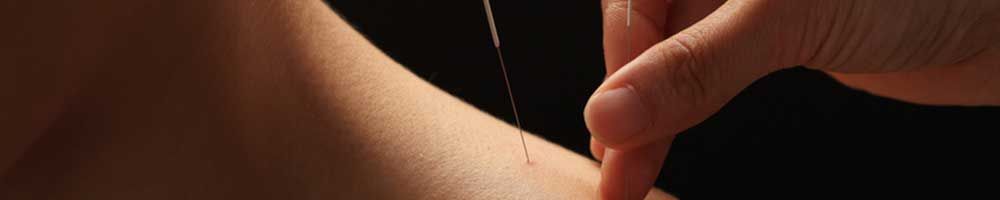
Frequently asked questions about acupuncture
Does that help?
How is this actually supposed to work?
These questions are very familiar to me. They were the real reason why I went to Beijing after studying human medicine. During my studies, I assisted a doctor who used the acupuncture method. I couldn't explain the effect of these small needles because it's just bare steel with no other additives, no false bottom like in a magic trick. Pure placebo effect? This was difficult to imagine. Too many people felt better after treatment. Nevertheless, I secretly hoped that I could explain the effects of acupuncture and went to Beijing with this intention. However - as the interested reader can probably imagine from a website on the subject of acupuncture - everything turned out completely differently. It should also be mentioned in passing: when I subsequently treated the first elderly gentleman with acupuncture for his back pain and he told me the next morning: “Doctor, I'm feeling better,” I was probably just as amazed as he was.
Acupuncture (Latin: acus = needle, punctio = piercing) describes a treatment with small needles that are inserted into specific parts of the body. The aim is to regulate the body.
Opinions are still divided on this question today. In the West, users believe that when the needles stimulate skin nerves in a specific part of the body, an impulse is sent to the brain. From there the impulse is sent to another part of the body, where it causes a specific effect. This model uses the idea of a “brain switching center”. That would be the model that is most understandable to us. But there are also acupuncture points where no nerves can be found. However, the practitioners assume that certain hormone levels can change through the irritation of points. The body's own endorphins are increasingly released to combat pain. This attempt to explain the effect corresponds to western thinking.
The Chinese explain it completely differently. They basically assume a model of body energy that can be regulated with the needles. This energy flows in specific pathways called meridians. The points that you influence are now on these meridians.
You can perhaps imagine a cable with several light bulbs hanging on it - the meridian is the cable, the points are the light bulbs. The needles now regulate the body's energy, whereupon a balance should be restored according to the user's ideas/considerations.
The crucial question. In the past, sharp stones or needles made of bronze were used. A famous Chinese doctor is said to have been able to cure any disease with just one prick. If you see the needles from his time, you could imagine why. The patient would therefore voluntarily not allow a second stitch. Today the needles look different. The dagger-like needles have been replaced by hair-thin needles, the insertion of which is normally hardly noticeable. You use several needles for one treatment, the fewer the better. According to the above-mentioned view, we are dealing here with the energy of a person, so to speak with just a single battery that enables the reaction to the treatment.
The more needles are placed and the more impulses are given, the less the body should react to the individual needle. If you use the example with the light bulbs again: if I hang a lot of them on a battery, the individual light bulb shines weaker. Treatment with an extremely large number of needles will therefore eventually become ineffective.
In acute or very serious illnesses, such as a recent heart attack or cancer, the needles are out of place. In any case, I don't use acupuncture in such cases for understandable reasons.